My Books
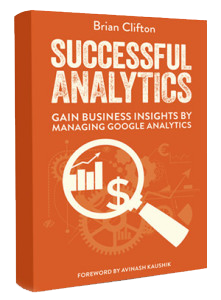
Successful Analytics
Gain Business Insights By Managing Google Analytics
ISBN: 978-1910591000; 336 pages; Full colour; Paperback; Published 2015
As the title suggests, this book details how to be successful with Google Analytics in your organisation. Because there’s nothing worse than a great analysis of bad data, the book has a strong focus on data quality, and I detail the process of how to audit your Google Analytics data without looking at code. With clean data coming in, the emphasis switches to building KPIs and dashboards, with a chapter dedicated to real-world case studies via story telling!
This book is for you if you are a (or an aspiring) data manager/stakeholder who needs a strong understanding in the key areas of using Google Analytics and guidance for building a “data informed” culture within your organisation. There are chapters to help you build your internal measurement process; jumpstart guides for understanding key features and tracking methodologies; help with understanding your data responsibilities i.e.privacy best practice and EU privacy laws; and guidance for building your data team. Note, this book is not a set up or user guide for Google Analytics. Rather it’s a book about building your internal data strategy (an it was written way before GA4!).
Here’s your opportunity to address the real issue of why your analytics isn’t delivering the results your expected.
Above all, this book focuses on moving from data and analysis into insight and business value.
Exceptionally good at explaining the important things. Full of powerful tips that are invaluable when you are communicating at the board level.
Interest piqued…?
- You can purchase the ebook from the usual app stores, including Kindle (the printed version is now sold out).
- Checkout unsolicited reader reviews on this site (the comments of this page), or from Amazon purchasers.
- PDFs – read the Introduction or get the detailed version of the Table of Contents.
This short video is from an interview Rene Nijhuis did at the iProspect offices. This question is: Why do you write books?
More on my YouTube Channel.

Advanced Web Metrics with Google Analytics
Three editions (2008, 2010, 2012)
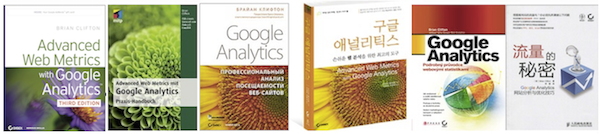
Translated into 5 languages with more than 80,000 copies sold
AWM was a huge success for me – at the time it sold more than all other Google Analytics books combined! They were technical and advanced guides aimed at deep-dive practitioners. That is, for digital marketers and analysts to understand the detail of Google Analytics. I would describe it as a hands-on manual of techniques and methodologies to solve real-world website problems using data.
Please note the content is now way out of date. The last version was published in 2012 and although the principals and approach remain very relevant, specific technicalities and features of GA have moved on – for example, universal analytics and GTM came after this.
Reviews and feedback for Advanced Web Metrics with Google Analytics are both humbling and very rewarding – its why I continue to write! So if you have read one of my books and left a review/comment – a big thank you.
The best edition yet – worth every penny!
Must Read for Online Marketing Professionals
Fantastic book for academia and professionals
More Google Analytics book reviews…
Looking for the AWM book errata?
29 Comments
Trackbacks/Pingbacks
- Quora - Which Google Analytics book should I read?... These two books are best ever and sufficient. * Advanced Web Metrics with…
Rated 5 out of 5 stars. Successful Analytics book is value for money and I would say you will get a positive ROI from the book.
This is the must have book if you are using Google Analytics and i highly recommend it whether you are a beginner or advanced. It covers all areas of Google Analytics in detail to enhance your knowledge. What i am impressed with is the use of practical examples that anyone level of user can relate to.
Keep this book close by whenever you are working on Google Analytics as it will most probably have the answer you are looking for.
Rated 5 out of 5 stars. Brian’s previous books dealt with the detail of GA implementation and usage and became the go-to guide. This one however is for those of us that are already familiar with GA but are struggling to take it to the next level. Very useful for managers of data also. In fact buy two copies – one for you and one for your boss (or visa versa). You will not regret it..!
Rated 5 out of 5 stars. This is the first book about Digital Analytics that truly takes a managerial perspective onto the world of Digital Insights and Investment. The part about GA vs. GA Premium is a tad too long for me (as a reader) but nevertheless necessary. The part about cookies/privacy is very informative and sheds light onto a very understated point that marketing teams like to forget about.
My favorite parts of the book are (as for most who read it I am convinced) about KPIs, Dashboard, and the utterly precious Audit Scorecard.
KPis and Dashboards:
This part addresses the growing issue of presenting opportunities to management and building a team based upon level of GA maturity and company size.
Everything there is layed out in a very structured way which also explains the relative lightness of the book.
The Scorecard Audit:
This is a brilliant project management tool when it comes to tying business needs to websites, mustering up teams around this unique goal, implementing the GATC the right way (through GTM in most cases) and providing a great peace of mind when it comes to data quality.
Maybe another 2 books to write for you Brian:
I believe the next big step from management’s perspective lies in: how do I best connect the dots between Digital Analytics, Business Intelligence and Customer Analytics (for attribution modelling aspects, CRM or even further Omni-channel investments…) ?
As for Digital Analytics, its true challenge in the near future lies in the Internet of Things and making sense of the great potential in it (and still part the noise and the music).
Rated 5 out of 5 stars. This is an excellent book. I highly recommend it as a guide to navigate all the many management issues around web / digital analytics.
Although there is some practical advice on how to handle Google Analytics set-up (chapter 4, 5 and 6), for me, this book is essentially about how to improve management of the organisational side of digital analytics. Most of the free blogs on “Digital Analytics Management” (try googling this!) or GA Management, are aimed at developers or GA Practitioners, not Marketing Managers or Heads of Digital. So this book fills that gap brilliantly!
The reality is; marketers are dealing with a complex array of tools, and this only contributes to the data and organisational silos many companies face. This brings new dilemmas, misunderstandings and organisational issues that are often ignored, simply because they are either not well understood, or they are just too hard to tackle!
As Brian says; “Google Analytics is Not Customer Analytics“. There is a lack of understanding of how different tools contribute to overall business intelligence, especially at senior levels, and the real issue is the lack of process, governance, planning, structure, skills etc. Its almost like there is a ‘generation gap’ here, in the same way we see this with Social Media. This book is a truly excellent guide to help managers facilitate the right debates in the business, and create better understanding of the issues, especially at senior level.
The ‘When I hear this….‘ and ‘I reply with‘… at the end of each chapter, resonate so well with real life experiences. The book is very frank, and gives real, practical advice from someone who lives and breathes digital analytics. This book is ahead of the curve, so for those who do wish to excel in this area, I recommend reading it. And reading it again.
Rated 5 out of 5 stars. I did buy this awesome book that tackles the tool (Google Analytics) in a unique way, so you can expect that you can see the business goals to be met in the book.
If you are an intermediate user, advanced user or a professional user, like me you will find all the information that you need to know to do the job as well to refresh and learn new concepts and technics.
Rated 5 out of 5 stars. Successful Analytics is well written, enjoyable and has a solid mix of technical and insightful.
I think it was the way Brian pulled back the curtain on Google’s handling of your data (e.g. sampling) that I found most useful. It allows me to make decisions with my data, free of assumptions.
I feel more certain in my handling of Google Analytics’ data since reading Successful Analytics. Thanks Brian.
Rated 5 out of 5 stars. In Brian’s latest and arguably best book on analytics, he takes us on a journey from choosing Google Analytics or Google Analytics Premium through to helping us obtain “deductive” and “inductive” insights from a properly configured Google Analytics account.
Brian introduces us to a wonderfully detailed yet easy to follow Google Analytics audit process, which enables us to assess our Google Analytics installation and then move on to improve data collection in order to gain true insight. Brian reminds us of why we use Google Analytics for both “informative” and “action” insights and informs us that Google Analytics helps us with the two key determinants of website success – “visitor expectations” and “user experience”.
Little nuggets of Brian’s wisdom and consulting experience litter each chapter and the final chapter itself provides excellent examples of both simple and complex applications of Google Analytics applied to real life digital marketing and conversion challenges. For Google Analytics practitioners, I cannot recommend Brian’s book highly enough.
Rated 5 out of 5 stars. One of the few Analytics books I’ve come across that provides actionable content from the get-go
It takes you through from the very start in setting up and tracking your analytics through to how to create specific tasks. More importantly, as organisations begin to set their strategy and objectives through quantitative data, there is a handy guide for digital marketers in how to translate GA insights into C-Suite terminology so to get buy-in into what you’re identifying
This book as lots of insights both for analytics, digital marketers, strategists as well as the C-Suite and would not hesitate in recommending this
Rated 5 out of 5 stars. Very hands on and helpful for any organization planning to go ahead with web analytics
Rated 5 out of 5 stars. I began skimming this book and got sucked in!
This book is excellent. It provides a framework for digital marketing analysts, strategists and managers to understand and communicate the value of digital analytics to senior leadership.
Once the value of digital analytics is understood it can be used to uncover and improve the value of the organization’s digital assets…websites, apps or most any digital customer touch points for that matter.
What is your audience worth and how can you better meet their needs? This book will get you started down that road. It provides real world techniques for choosing the right analytics product for your organization, validating data, building trust in data, building a team of analysts, monetization of conversions and several other insightful approaches.
Successful Analytics is another great analytics book by Brian Clifton. It’s engaging, informative and well written. Buy two copies, one for yourself and one for your senior manager (or vice versa!).
Rated 5 out of 5 stars. This book should help us all promote the change we need, to connect analysis to forward-thinking strategies. I consider myself lucky to know and care about developments in this area, and “Successful Analytics” is the best argument I’ve run across for implementing a genuine data strategy. We know we can do our data-into-information-into-insights process, if we are allowed to set up the infrastructure we need to monitor how our data answers good questions. My expectation is that word-of-mouth among managers for “Successful Analytics” will help us win the elbow-room we need to connect the gears between our data-analysis and corporate risk-taking.
Rated 5 out of 5 stars. Google Analytics is a very powerful platform and few people master it at the level Brian Clifton does. Resources about the technical aspects of measuring abound – and Brian covered this topic extensively in his previous book, “Advanced Web Metrics with Google Analytics” (1). This time around, Brian’s “Successful Analytics: gain business insight by managing Google Analytics” offers a different perspective – it’s all about how you can leverage the platform from a managerial perspective.
The first two chapters, as well as chapter six on tracking methods, are a little bit more technical – but nevertheless important for managers, if only to “speak” the language of their analysts! The remaining of the book is really where I think there’s the most value. Each chapter addresses a specific area of management: setting expectations and developing the analytical process, data quality and its impact on decisions, data roles & responsibilities, growing an insight team, and of course, KPIs, dashboards and driving success.
What I particularly like about the book is how it implicitly covers many aspects of a concept so dear to me: digital analytics maturity (see DigitalAnalyticsMaturity.org). The book could serve as a companion book for a course where students could learn about the concepts, and apply them immediately in a real-life environment. If you are new to GA and want to understand the concepts, this book is for you. But above all, this book is highly recommended to anyone who has to deal with people who deal with Google Analytics 🙂
Footnote:
1) “Advanced Web Metrics” was chockfull of “how to” but sadly, although those examples still apply for “classic GA”, those examples are now obsolete for anyone using UA, so I wouldn’t advise buying it.?
Rated 5 out of 5 stars. I am very positive about this GA book for the following reasons:
1. It is not about the functionalities of Google Analytics, but the implementation in your organisation. I like that approach.
2. He offers best practices that you can implement in your organisation. Especially the example about content optimization is very useful.
3. He shares a Google Analytics audit scorecard that you can use for your own implementation. So you can determine your Google Analytics quality score.
I am an extensive Google Analytics user and writer of a Dutch handbook about Google Analytics. I think every Analyst/E-commerce manager should implement Brian’s strategy and process in his/her organization!
Rated 5 out of 5 stars. Having used Google Analytics since 2007 (and other tools before and after that), and read dozens of books and hundreds of blogposts on digital marketing and web analytics, I know the value of informed and up-to-date knowledge in this field. Brian Clifton always delivers that, which is why I never miss a chance to read what he has written.
“Advanced Web Metrics” has been a companion for years, and I was excited to get “Successful Analytics”. And I wasn´t disappointed. It´s worth every minute and every penny.
My only critique, or wish rather, is that it could be a few hundred pages longer, so that I´d get even more of Brians valuable experience at such a good price and in such a digestible way.
Thanks, and looking forward to your next book! (or post 🙂
Rated 5 out of 5 stars. I have read and am a huge fan of all of Brian’s Analytics books. His latest is my favorite. What I always like most about his books is that they are very practical – and this one is no different. Brian goes in-depth into planning and strategy, organization of teams, specific techniques for auditing your current set up, key areas of GA, KPIs for different types of websites, how to present your analysis and a ton more. I like the fact that he offers different recommendations and options based on different types of organizations and analytics maturity within the organization.
If you’ve ever struggled with getting buy-in for digital analytics, this book is for you. If you have an established analytics program and are wondering how to kick it up a notch, this book is for you as well.
Rated 5 out of 5 stars. Brian’s books have been one of the constants of my analytics career, so it’s always exciting when a new one comes out! This book is a departure from the previous books by focusing much more on actually using data within your organisation. Absolutely, there’s lots of stuff about implementation but there’s great insights which you should be able to start working with directly. The non-technical approach is spot-on and makes this a great addition to the marketing and management team’s reading list.
Rated 5 out of 5 stars. This is a great book that explains Google Analytics, and how to use quality data from it in an easy way. I really like that it’s so easy to read, in both text and comfortable to hold in hands while reading.
Rated 5 out of 5 stars. I highly recommend this book!
Rated 3 out of 5 stars. I am a big fan of Brian Clifton’s previous series of Google Analytics books. They are the best written on the subject IMO. His new book is quite different and primarily helpful if you work for, or consult with, a large firm. I am an Internet Marketing consultant and my clients are all small. Successful Analytics was not very helpful for me. If my clients were large organizations, I would give the book a higher rating.
Hi Brian,
Is there any case studies or examples offered in the book that specifically cover how to track, measure, and analyze the effectiveness and ROI of Facebook and twitter marketing campaigns?
Thanks!
@James There are two key elements in tracking social media success – what happens on your site i.e. love button usage (follow me, tweet me, like me, +1 me etc)., and what happens away from your site (a campaign link initiated by you becoming viral.
The first part requires the correct implementation of your love buttons. The second, requires the correct setup of your campaigns. Both of these are discussed in the book from a best practice point of view. That is, it does not matter if your focus is on social media marketing – a good implementation and usage of Google Analytics will track ALL of your visitors.
Have a look at Chapters 10 “Focusing on KPIs” (Social Media KPI Examples) and Chapter 11 “Real World Tasks” (Tracking Offline Marketing)
Hi there!
Loved the 2nd edition, ordered the 3rd but it is delayed (CDON.com) any idea of when it will be shipped?
Cheers!
/H
Hi Henrik – thanks for the feedback. There are no publishing delays with the 3rd edition, so I am hoping the reason is that CDON have sold out due to demand 😉
Susan/ijauregui: – apologies for not replying sooner. I just noticed your feedback here!
Many thanks for your praise. I hope you enjoy the 3rd edition (now out) just as much.
Hello Brian,
I’ve just read your book. Thanks again for offering it to me 🙂 Your book is helping me a lot in my job (I’m web analyst in an agency). Your explanations about ROI and Real-World Task are really useful. I also like the tips you give about some KPIs and techniques. It’s very easy to understand and take in practice.
Thanks for this book. I’m making my way through 2nd Edition and am picking up lots and lots. Since GA now has offered the later asynchronous code snippet and your book recommends the older snippet, is there any one-place to catch you up on things to add in all the code snippets you offer in the book — to include newer code?
The older code tends to include document.write(unescape(etc)) whereas the newer code does not. Is there some kind of global comparison to use to incorporate your code snippet examples, esp the try statements in Chapter 7?
When will the 3rd edition be released? Assuming the revised edition will focus on the v.5 release of Analytics?
Todd: Working on it now. Release date is anticipated in early 2012 to include all the new features that are coming this autumn… 😉
I thought I knew alot about analytics until I was given this book as a present. Wow, it blew my mind! Great info and definitely worth adding to your collection if you are a web metrics junkie….